
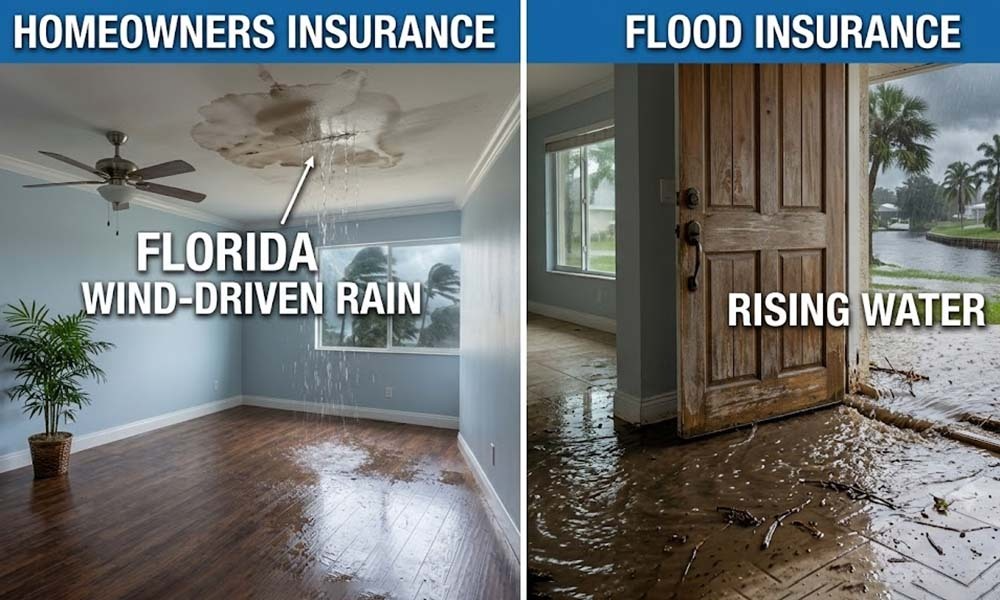
Standard Florida homeowners insurance (HO-3 policy) only covers sudden and accidental internal water damage, such as a burst pipe, water heater failure, or an appliance leak. It explicitly excludes damage caused by external rising groundwater, canal overflows, or hurricane storm surges. To be covered for rising water, you must have a separate flood insurance policy through the National Flood Insurance Program (NFIP) or a private flood underwriter.
For property owners in Cape Coral, Fort Myers, and the surrounding Southwest Florida region, water is a defining feature of our beautiful landscape. However, it is also our greatest financial risk. Following a major storm or a sudden plumbing failure, homeowners are often shocked to learn that their insurance policies do not cover the damage they assumed would be fully protected.
The dispute between “water damage” and “flood damage” is one of the most contentious issues in the Florida insurance market. Filing a claim under the wrong policy can lead to an immediate denial, costing you tens of thousands of dollars out of pocket.
To protect your investments, you must understand the legal and technical definitions that insurance adjusters use to evaluate your loss.
(Developer Note: Insert a contextual internal link to the Pillar Page here).
Navigating a major property disaster? Check out our Complete Guide to Flood Damage Restoration & Rebuilding in Cape Coral for a step-by-step roadmap to recovery.
1. The Legal Definition: Water Damage vs. Flood Damage
Insurance companies operate on strict contractual language. To them, the origin and behavior of the water determine which policy applies.
What Subscribes to “Water Damage”?
In insurance terminology, standard water damage refers to water that breaches your home before it hits the ground. It is almost always internal, sudden, and accidental.
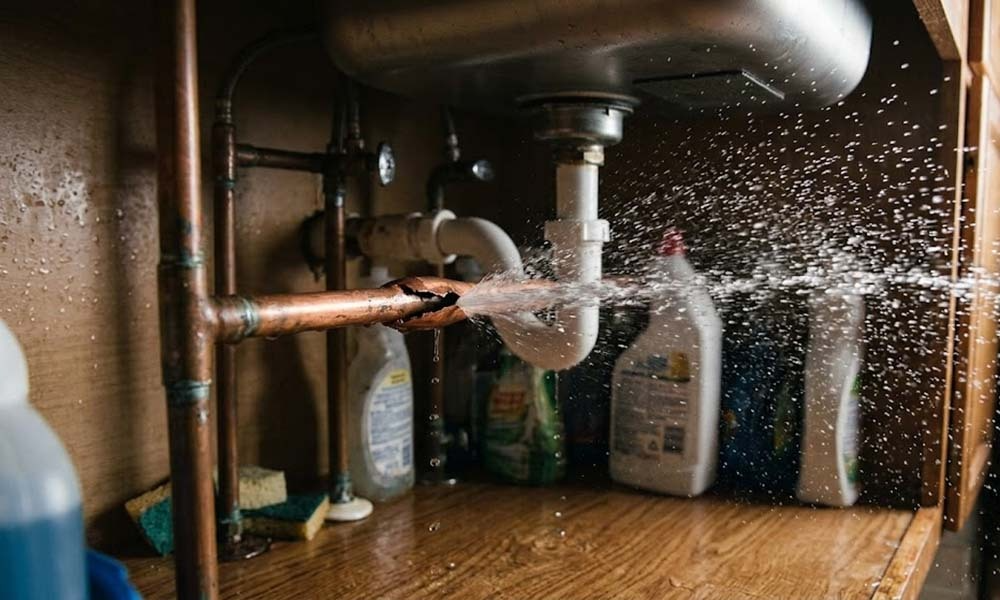
- Examples: A copper pipe bursting behind your bathroom drywall, a ruptured washing machine hose, a cracked water heater tank, or rainwater leaking directly through a roof that was punctured by a fallen tree limb during a storm.
What Constitutes a “Flood”?
According to the Federal Emergency Management Agency (FEMA), a flood is defined as a general and temporary condition of partial or complete inundation of two or more acres of normally dry land, or of two or more properties, from:
- Overflow of inland or tidal waters (such as Cape Coral’s extensive canal system overflowing).
- Unusual and rapid accumulation or runoff of surface waters from any source.
- Mudslides or the collapse of land along the shore of a lake or body of water.
The Golden Rule: If the water touched the ground outside your home before it entered your structure, it is legally a flood, and your standard homeowners’ insurance will not pay a single dime for it.
[IMAGE 1 PLACEHOLDER: The Reality of Groundwater Intrusion] Developer Note: Insert an image here using our approved “ugly/real” mobile snapshot aesthetic. Alt Text: Saturated drywall and warped baseboards from rising groundwater in a Florida home. Visual Vibe: A handheld cell phone photo showing a close-up of a wall baseboard. The paint is bubbling and peeling away from the drywall due to moisture absorption from the floor up. Harsh lighting, realistic imperfections, no artificial gloss.
2. What Your Standard Florida Homeowners Insurance (HO-3) Covers
If you own a home in Lee County, you likely hold an HO-3 insurance policy. While this policy is comprehensive for fire, theft, and wind damage, its water coverage is highly restrictive.
Covered Perils Under HO-3:
- Plumbing Overflows: If your toilet or sink overflows suddenly, the resulting clean-up and structural drying are typically covered.
- Appliance Malfunctions: Ruptured lines from dishwashers, refrigerators, or washing machines.
- Roof Leaks (With Wind Proximity): If hurricane winds rip shingles off your roof, allowing rain to pour into your attic and destroy your ceiling drywall, this is covered under your windstorm portion of the policy. The water entered from above due to a structural failure caused by the wind.
Strict Exclusions You Must Know:
- Gradual Damage / Wear and Tear: If a pipe has been slow-dripping for six months and has caused gradual wood rot and mold, the adjuster will likely deny the claim, stating it was a “maintenance issue.”
- Sewer Backups: Standard policies do not cover water that backs up through sewers or drains unless you have purchased a specific “Sewer Backup Endorsement.”
- The Anti-Concurrent Causation Clause (ACC): This is the most dangerous clause for Florida homeowners. It states that if a loss is caused by two events—one covered (wind) and one excluded (flood)—occurring simultaneously, the entire loss is excluded unless the homeowner can prove exactly which damage was caused by the wind versus the water.
3. What a Dedicated Flood Insurance Policy Covers
To protect your property from storm surges, tidal waves, and heavy downpours that cause local street flooding, you must secure a separate flood policy. Most policies are written through the National Flood Insurance Program (NFIP), managed by FEMA, though private flood insurance options are becoming more common in Florida.
SFP (Standard Flood Policy) Structural Coverage Includes:
- The foundation, beams, and structural framing elements of your home.
- Central air conditioning systems, furnaces, and water heaters.
- Electrical and plumbing systems.
- Drywall, insulation, and built-in custom cabinetry.
- Debris removal costs during the remediation and biohazard extraction process.
SFP Personal Property (Contents) Coverage Includes:
- Furniture, clothing, electronics, and portable appliances.
- Washers, dryers, and freezers (including the food inside them).
- Valuable items like rugs or artwork (up to a specific cap).
Crucial NFIP Boundaries:
An NFIP policy caps structural coverage at $250,000 and contents coverage at $100,000 for residential properties. If your home in Cape Coral is valued above these limits, you must secure an additional Excess Flood Insurance policy from a private underwriter to protect your full investment.
4. The “Wind vs. Water” Gray Area: Lessons from Southwest Florida Hurricanes
In the wake of major hurricanes hitting Southwest Florida, thousands of homeowners found themselves caught in a legal nightmare known as the “Wind vs. Water” dispute.
Imagine a Category 4 hurricane tearing through Cape Coral. The 130 mph winds damage your roof, shattering your windows and letting rain drench your interior. Two hours later, a 6-foot storm surge floods your first floor. Your home is devastated.
When you file claims, your homeowners’ insurance company claims the damage was caused by the flood surge. Your flood insurance company claims the damage was already done by the wind.
How to Protect Your Claim with Evidence:
To survive this gray area and secure your payout, documentation in the first 24 hours is paramount:
- Check Local Meteorological Data: Note the exact time the winds peaked versus when the storm surge rolled in.
- Document the Height Visuals: Photograph the exterior of your home. If there are watermarks on the outside of your house, that proves the exact level of the floodwaters. Anything damaged above that line belongs to your wind/homeowners policy.
- Hire a Certified Restoration Partner Immediately: Do not try to clean it up yourself. You need an expert who understands how to document moisture migration properly.
[IMAGE 2 PLACEHOLDER: Professional Moisture Mapping] Developer Note: Insert a real contractor-style image here. Alt Text: An expert technician using a moisture meter to document water damage in a Cape Coral home. Visual Vibe: A realistic, unedited cell phone image of a technician’s hand holding a digital moisture meter against a water-stained wall stud. The drywall has been cut away. Gritty, authentic construction site view with natural lighting.

5. How AMO Excellence Navigates Your Insurance Claims & Rebuild
Dealing with insurance adjusters requires an undeniable level of technical expertise and documentation. At AMO Excellence, we don’t just clean up the mess—we actively protect your financial recovery.
The Xactimate Standard
Insurance adjusters do not write estimates on standard Word documents; they use a highly specialized software called Xactimate. This software uses localized zip-code pricing to determine the exact cost of materials, labor, and equipment rental in Cape Coral.
AMO Excellence writes all mitigation and rebuilding estimates using the exact same Xactimate platform. When we submit your claim documentation, it speaks the adjuster’s language perfectly, minimizing pushback, reducing delays, and ensuring every square foot of damaged drywall, flooring, and custom cabinetry is accounted for.
The General Contractor Advantage
If you hire a standard water extraction company, they will dry your home, hand you a bill, and leave you with a gutted structure. You then have to fight your insurance company for a secondary check to hire a builder.
As a full-service, licensed General Contracting firm, AMO Excellence simplifies the entire ecosystem. We bridge the gap between emergency mitigation and structural restoration. Whether your damage requires an internal plumbing repair covered by your HO-3 policy or a massive structural reconstruction regulated by the FEMA 50% Rule due to a storm surge, our team manages the architecture, city permits, and structural execution from start to finish. (We also offer flexible financing paths through our Hearth Finance portal to help cover deductibles or fund luxury upgrades during your rebuild).
Don’t Fight the Adjusters Alone
Water claims are incredibly time-sensitive. Delaying your mitigation gives insurance companies a reason to deny your payout due to neglect.
Ensure your property is documented accurately, dried professionally, and rebuilt to the highest standards. Contact AMO Excellence today for immediate, expert response to your water or flood emergency.